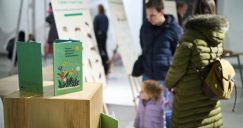
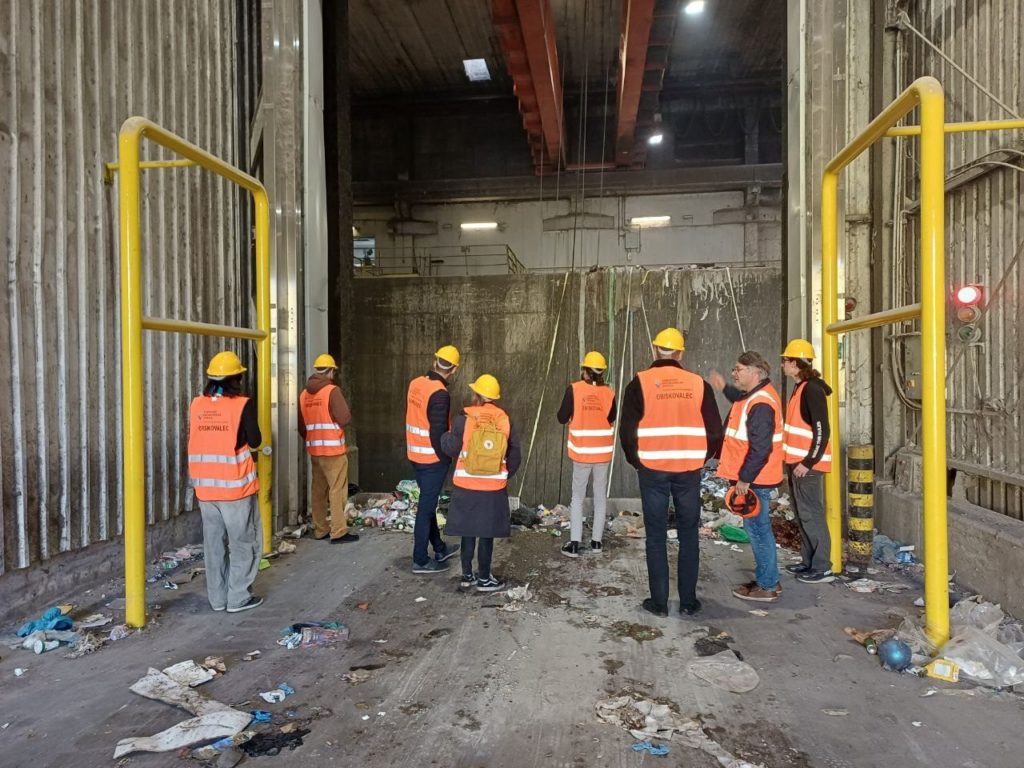
In November, as part of the LEVERS project, LEVERS partner Kersnikova went on a guided tour of RCERO Ljubljana. Although at first glance it is not a typical place that one would associate with education and science, it turned out to be a good example for thinking about how learning takes place in the real world—where technology, environmental practices, social needs, and politics intersect.
RCERO as an example of a circular system in practice
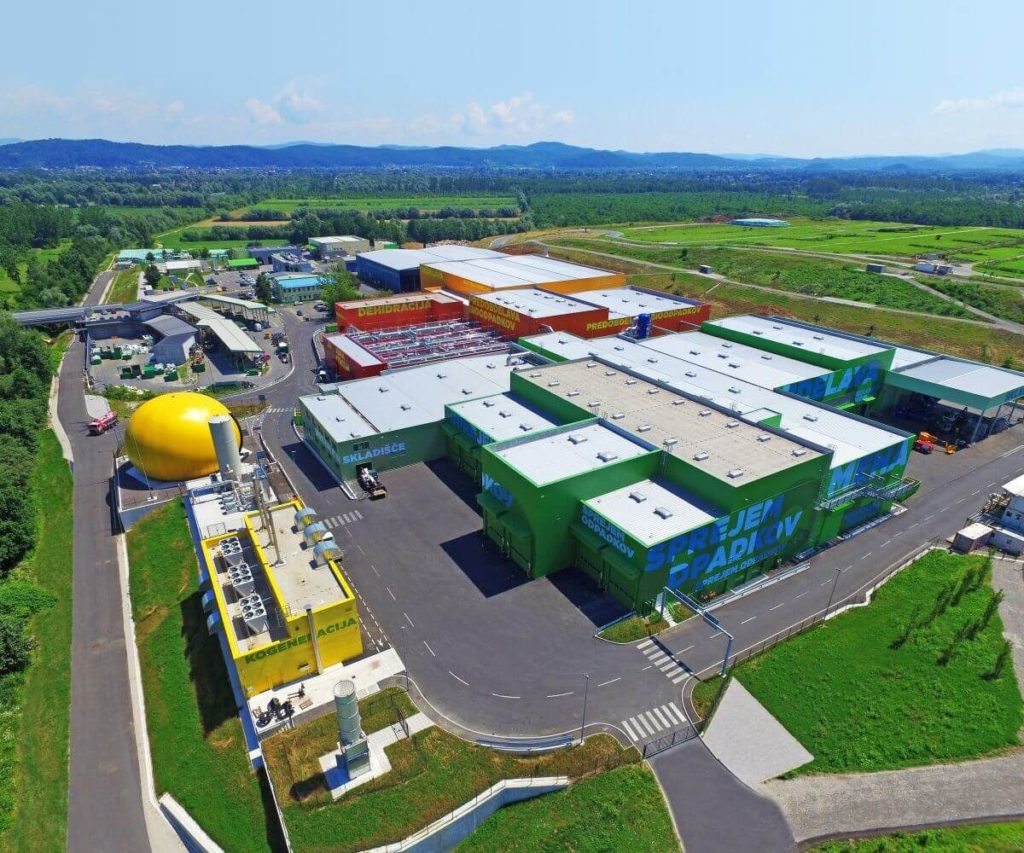
RCERO is the largest and most technologically advanced waste treatment system in Slovenia, bringing together 46 municipalities and enabling waste treatment for approximately 760,000 residents. Although its core is waste management infrastructure, it is in fact much more: it is a tangible example of how the circular economy works when it transcends theoretical frameworks and becomes part of everyday life.
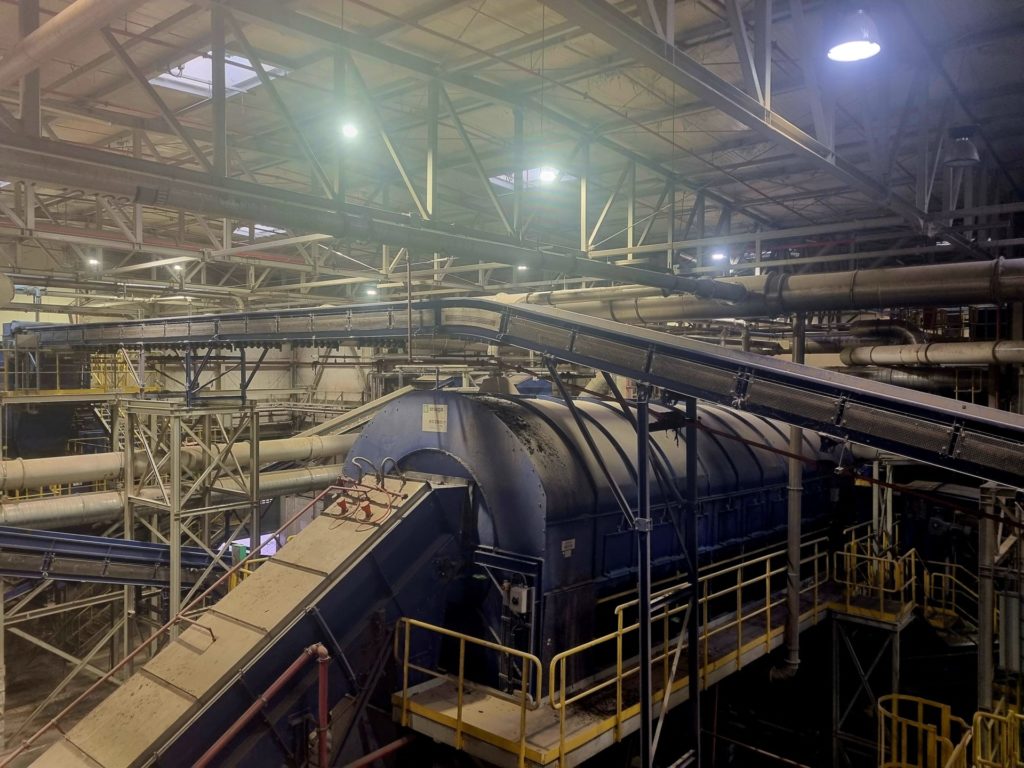
In its three key mechanical-biological plants, waste is sorted, fermented, stabilized, and processed. The results are:
- compost from biological waste,
- gas, which is converted into electrical and thermal energy,
- secondary fuel,
- and a small amount of residue that ends up in a landfill.
This is an industrial process that we usually take for granted as part of our everyday lives, but in reality it is one of the most powerful examples of how environmental, technological, and social systems are intertwined.
LEVERS and RCERO
One of the main objectives of LEVERS is to develop systemic thinking, environmental responsibility, and sustainable competencies. In our local education system, we develop these concepts primarily through topics related to food, materials, and laboratory practices. However, systemic approaches require a broader perspective: teaching young people that every topic—including food—exists within larger flows of raw materials, energy, biological processes, and infrastructure.
Our visit to RCERO served precisely this purpose:
- to broaden our view of circular processes,
- to see how biological and technological processes work on an industrial scale,
- to understand how local infrastructures are part of a broader environmental system,
- and to indirectly transfer these experiences into workshops and the educational process.
Although we are primarily concerned with the future of food, microbiology, biotechnology, living materials, and innovative approaches to education, RCERO appeals to us in several key ways:
- Biological processes in the real environment
RCERO’s anaerobic fermentation reactors operate on the same basic principles as the processes we use in the laboratory — only on a large scale. This connection between the “micro” and “macro” environments is extremely valuable in teaching young people about:
- material degradation,
- microbial activity,
- bioenergy,
- metabolism, fermentation, and composting
2. Understanding material flows
Learning about food is not complete without understanding what happens to it “on the other side” — when it becomes waste. RCERO makes it easier for us to show young people that every product, every food, and every material travels through a complete life cycle. This is a fundamental concept of sustainability literacy.
3. Open schooling
Open schooling is based on the idea that schools and educational institutions collaborate with local actors. RCERO is one of the most obvious examples of infrastructure that can serve as a partner in the educational process — not necessarily thematically, but as an example of how a local system works, which young people are often unfamiliar with.
4. Systemic design
The LEVERS framework emphasizes understanding complex systems. RCERO offers an exceptional example of a system where:
- social habits (waste separation) are intertwined,
- technological processes,
- energy flows,
- biological processes,
- local politics,
- regional cooperation.
Such an example makes it much easier for young people, as well as educators, to understand what a system actually is.
5. Reflection on responsibility and the future
When we talk to young people about sustainability, we often speak in abstract terms. The RCERO tour was valuable because it showed:
- what the solution looks like,
- what a functioning system looks like,
- how much logistics, knowledge, technology, and coordination are behind it.
Such examples support LEVERS’ mission to create more informed, critical, and active citizens. The visit to RCERO was not a “study” in the classical sense—it was an orientation. As a team that develops programs for young people, we gained:
- a better understanding of local environmental processes,
- a sense of the scale of the systems we want to address,
- inspiration for pedagogical approaches,
- an understanding of how very different sustainable practices are connected.
Such visits are also very important because they allow us to build our knowledge not only on theory, but also on concrete experiences of local systems.