ONLINE WORKSHOP/ Dealing with the people factor challenges of climate change
- Event, Ireland, News, Workshop
explore 3 insights from neuroscience and psychology that can help to understand how to build climate and nature action in schools
In this workshop for teachers, non-formal educators and leaders of educational institutions, we explored 3 insights from neuroscience and psychology that can help to understand how to build climate and nature action in schools: How can you avoid or bypass the growing polarisation of climate action? How do people change -or not? How do we bring people along on a journey of building whole-institution approaches to climate and nature action?
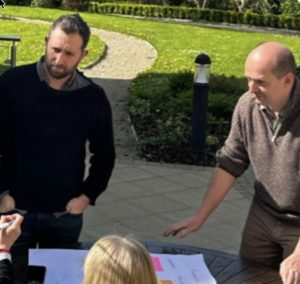
📣 Facilitated by neuroscientist & science communicator
Dr Kris De Meyer (Director, UCL Climate Action Unit) & Dr Jonathan Mille (Research Fellow in Climate Engagement, UCL Climate Action Unit)
Tuesday, 18th November
19.00 – 20.30 GMT