Stage 3: Design

“We had been working exclusively with the Brussels Region housing organisation – but it increasingly seemed too narrow. So we’ve widened our approach and decided to try and diversify our activities by working with other organisations working on summer/holiday camps for kids/adults that stay in the city during holidays. “

– Stickydot (Belgium)

‘Design’ ‘Create’ ‘Devise’ ‘Build’: Whatever language used to describe it, there is a point when ambition and understanding must shift towards action. The LEVERS project is focused on participatory action, so involving others in decision making was key. 

We needed to double check if we had adequately considered who could be involved, impacted, or otherwise have an interest in what we’re doing: actors in that system, stakeholders, users, the 19 environment or wider society. This isn’t only about representation; failing to engage different perspectives misses opportunities, risks unintended consequences and limits chances of success.

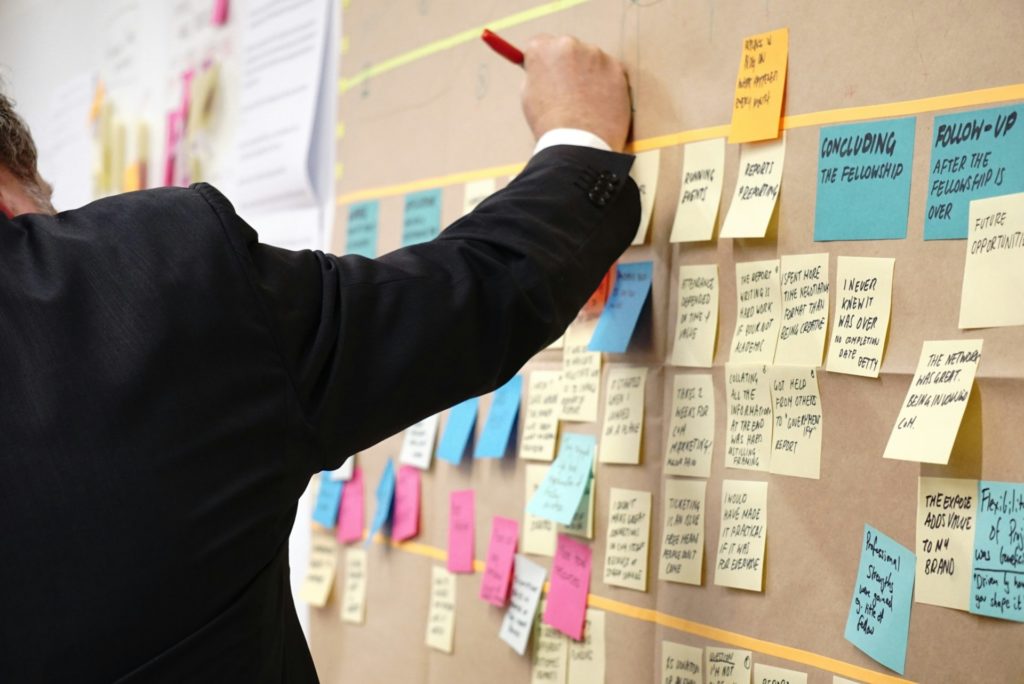
Each Learning Venture continued to build on their work from Stages 1 and 2. We used our early systems maps to anchor a process of further exploration, looking for clues to anchor our interventions. New maps emerged, layering target ‘users’ or ‘audiences’ and obvious partners and funders, over supply chains, competitors, regulators, communities and even our internal teams. The wider ecosystem, including impact to the planet, is an essential part of this consideration. 

After deepening our understanding of stakeholder needs, motivations and behaviours, we started into creating design hypotheses – speculations about what we could do and what impact that might have. Hypothesis building allows us to outline interventions into our systems with freedom – we say ‘what if?’ before committing. We can then iterate and improve, knowing we have a firm understanding of who – and what – is affected by our action. 

As the nine Learning Ventures close in on ideas, potential partnerships and collaborations are starting to firm up. With action in mind any existing loose conversations can be formalised, and as we close in on projects new opportunities might arise.

Stakeholder maps are a tool commonly used in business and organisational development. In the LEVERS process, using a climate and/or systemic lens made a difference. We paid more attention to those who might typically be marginalised or excluded; we used a collaborative approach which questioned roles, for example casting competitors or suppliers as potential partners or learners.

We then used hypothesis statements to build ideas – finally and freely speculating about different ways to work towards our desired outcomes.

  • Using our stakeholder maps, near star, the forces/factors identified using the framing questions and the cause diagram, we formulated one or more hypothesis statements about our stakeholders.
  • “Because we think A, we think that if we do X with stakeholder Y, we expect Z to happen.”
 

A is a key insight we’ve arrived at. Doing X is a mechanism. Z is the impact or influence you want to have. Hypotheses build from the deep work we’ve already done, resisting the jump to mechanisms (exhibition, book, campaign) in favour of building a considered and strategic scenario. We might create multiple hypothesis statements and evaluate between them. Once we have formulated our hypothesis statements, they then form the basis for our stakeholder research and testing during which they can be refined and improved.

Involve others LEVERS centres active participation, whether that’s through partnership and ecosystemic working, community involvement or cultivating learner agency. At its best this approach creates a multiplier effect, where all involved become agents of change. There’s also an overhead to this style of working and partners reported challenges in shifting to a more open way of working including decision making and control. This is inevitable but balanced by the many rewards yielded.

Forth’s stakeholder mapping exercise presented opportunities to rethink roles in the system and their learning needs. What if it’s the experts who have the greatest need to learn? “By thinking about stakeholders in terms of the role they play in the system you might find your target user or audience shifting.”

CPN formed its Learning Venture ‘bottom up’ – a new way of working for them as they offered everyone from urban pollination experts to policy makers to teachers equal say in the proposed activities. What they achieved was not without friction but emerged as what they’ve called ‘a connected ecosystem of learning in action’.

Design: Diary entries

Other Steps

Stage 4
Iterate

The nine Learning Ventures are now at varying stages of this firming up and commitment making process, reflecting how different scales of work and organisational contexts require different toolkits even within similar approaches.

Learn more

Stage 1
Intent

In this stage of work the nine Learning Ventures are setting a course, by expressing their ambition and finding shared goals. It’s not about a preferred course of action, but describing – and interrogating – desired outcomes.

This starting point can be revisited as the process progresses.

Learn more

Stage 2
Understand

In this stage of work the Learning Ventures take a step back to ask: what makes the existing system the way it is? Why is it not better already?

Asking these questions helps identify where in the system we might work to maximise our impact

Learn more

Stage 3
Design

In this stage of work, building on the ambition and knowledge accrued in the first two stages, we move towards ideas – the mechanisms that might be used to shift the system.

This requires further study, of who this is for and who it might affect.

The last version of The Field Guide is out !​